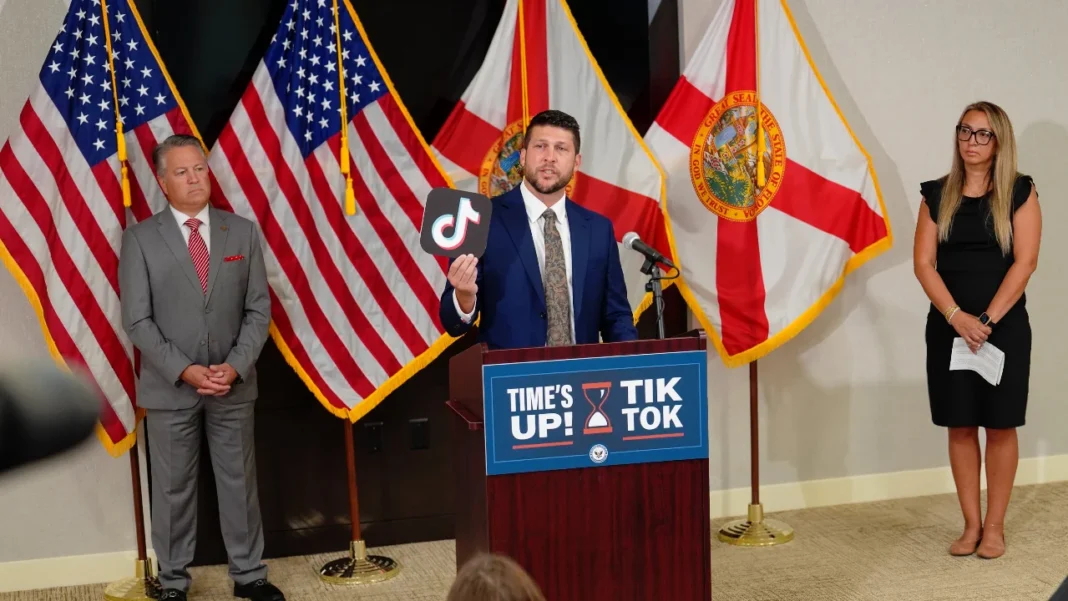

TALLAHASSEE, Fla. — Florida Attorney General James Uthmeier announced Monday that the state has filed a lawsuit against TikTok, alleging the social media giant violated Florida law by allowing underage users on its platform and misleading parents about the nature of content available to children.
The lawsuit claims TikTok has failed to comply with Florida’s landmark online child protection law, House Bill 3, while continuing to target minors as a key part of its business model.
“TikTok’s success hinges on its ability to addict children and teenagers to the platform,” Uthmeier said in announcing the lawsuit. “TikTok knowingly deceives parents and allows children to be exposed to harmful and inappropriate content in direct violation of Florida law.”
The legal action marks one of the most significant enforcement efforts yet under Florida’s social media restrictions aimed at protecting children online.
State Alleges Violations of HB 3
According to the complaint, TikTok has violated House Bill 3, which took effect on January 1, 2025.
The law prohibits children under 14 years old from holding social media accounts and requires parental consent before 15- and 16-year-olds can create accounts on covered platforms.
Florida alleges TikTok continues allowing users under the age threshold to access the platform and has failed to obtain required parental consent from older teenagers.
State officials argue those practices directly violate provisions adopted by the Florida Legislature to address growing concerns over children’s social media usage.
Representative Chip LaMarca praised the lawsuit and said Florida must continue protecting minors from what lawmakers view as harmful online practices.
“The State of Florida stands with families in protecting our children from the abuses of addictive social media apps,” LaMarca said.
Deceptive Practices Claims
In addition to alleged HB 3 violations, the lawsuit accuses TikTok of violating Florida’s Deceptive and Unfair Trade Practices Act.
The state argues TikTok markets itself as appropriate for users aged 13 and older while understating the prevalence of mature themes on the platform.
According to the complaint, content involving sexual material, drug use, profanity, self-harm, suicide, and eating disorders appears far more frequently than TikTok’s public representations suggest.
Florida alleges those disclosures mislead parents attempting to evaluate whether the platform is safe for their children.
Allegations of Targeting Children
The lawsuit further contends that TikTok’s platform design intentionally encourages addictive behavior among younger users.
State attorneys argue children and teenagers are particularly vulnerable to social media addiction and that TikTok has long been aware of those risks through internal research and company records.
Florida claims the platform nevertheless continued pursuing engagement strategies designed to maximize screen time among younger audiences.
The allegations mirror concerns raised by lawmakers, parents, and child safety advocates across the country who have questioned the impact of social media platforms on youth mental health.
Why It Matters
The case could become one of the highest-profile legal battles over social media regulation in the United States.
Florida has emerged as one of the leading states pursuing aggressive action against major technology companies over child safety concerns, and the outcome of the lawsuit could influence future enforcement efforts nationwide.
If successful, the case could also provide one of the first major tests of Florida’s House Bill 3 and its restrictions on youth access to social media platforms.
For now, the lawsuit signals that Florida officials intend to aggressively enforce the state’s online child protection laws and hold technology companies accountable when they believe those laws are being violated.