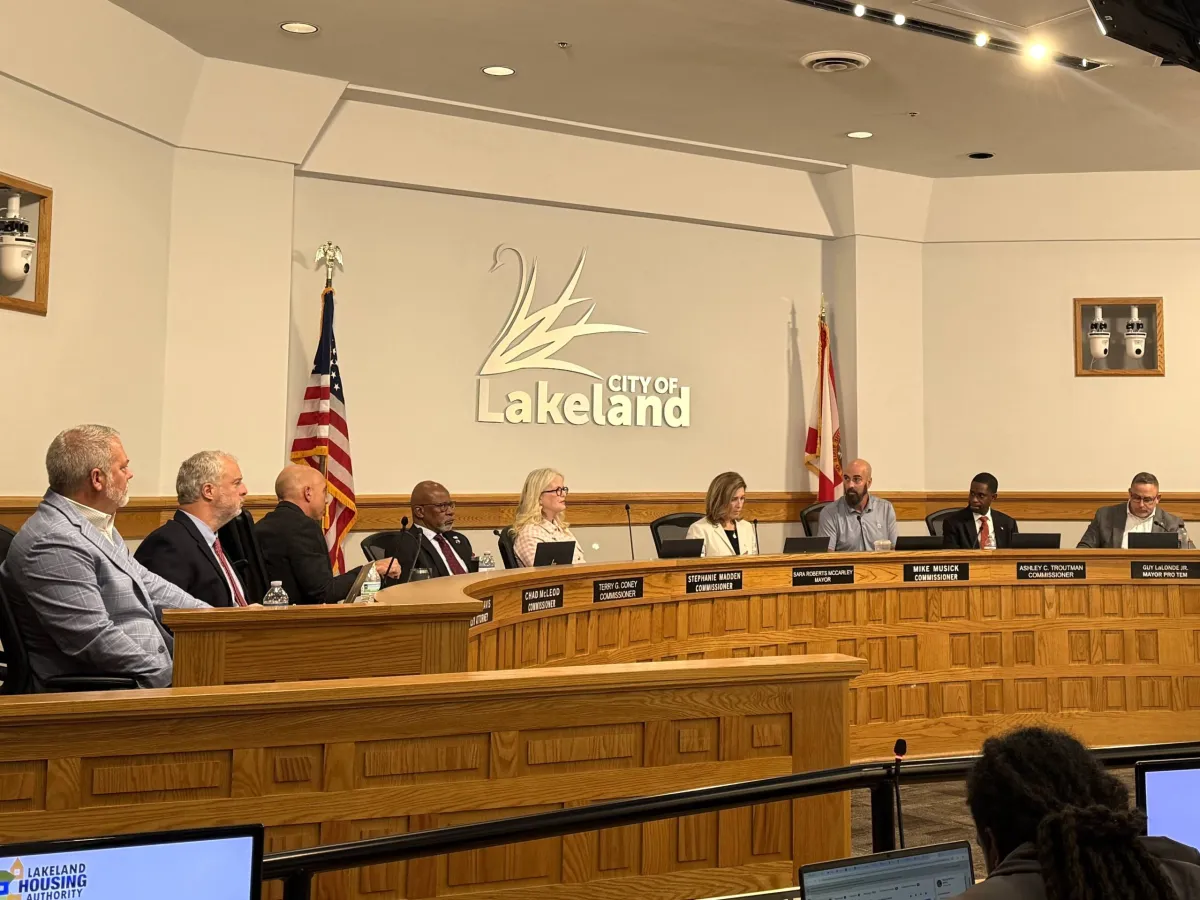
LAKELAND, Fla. — Lakeland city commissioners are moving toward a proposed 12-month moratorium on new large-scale data center developments after a controversial project sparked growing opposition from residents concerned about the impact on the city’s infrastructure, environment, and quality of life.
The proposed moratorium comes as Florida implements new statewide policies governing large-scale data center development. Senate Bill 484 preserves local governments’ authority over zoning and land-use decisions while requiring certain large electricity users to bear the costs of needed infrastructure upgrades. Readers can learn more in our guide to Florida’s new data center law (SB 484).
The City Commission has directed staff to draft an ordinance temporarily pausing approvals for new large-scale data centers while officials evaluate electrical capacity, water usage, transportation infrastructure, land-use planning, and other potential impacts. Commissioners say the temporary pause will allow the city to develop regulations before considering additional projects.
The proposal follows public backlash over Project Swan, a planned hyperscale data center that prompted lifelong Lakeland resident Brandon E. to launch an online petition calling on city leaders to halt new data center development until residents have greater input into future projects. Petition supporters argue the city should adopt clear regulations to ensure transparency and protect neighborhoods before approving additional facilities.
City officials say the moratorium is intended to preserve the status quo while staff reviews how large-scale data centers could affect Lakeland’s electrical grid, water resources, environmental sustainability, emergency services, and long-term growth. The review is also expected to result in new zoning and development standards specifically tailored to data centers.
Supporters of the temporary pause say the rapid expansion of artificial intelligence and cloud computing has fueled demand for hyperscale data centers across the country, but many local governments are still determining how to regulate facilities that consume significant amounts of electricity and water.
Lakeland is one of several Florida communities taking a closer look at data center development. Similar discussions or temporary moratoriums have emerged elsewhere as local officials weigh the economic benefits of technology investment against concerns over utility capacity, land use, noise, traffic, and neighborhood compatibility.
The issue has also reached the national stage. Earlier this month, Florida gubernatorial candidate and U.S. Rep. Byron Donalds introduced federal legislation aimed at preventing AI data center developers from shifting infrastructure costs to residential utility customers, arguing that homeowners should not subsidize rapidly growing artificial intelligence projects.
The debate over data center growth also extends beyond Florida. U.S. Rep. Byron Donalds recently introduced the Protecting Ratepayers Act, legislation that would require AI data center developers to provide their own power generation and water infrastructure instead of shifting those costs to public utilities and residential customers.
Lakeland commissioners are expected to continue considering the proposed ordinance during upcoming public hearings before voting on whether to adopt the one-year moratorium.
Primary Sources
City of Lakeland — Proposed Moratorium on Data Centers and Large Load Customers
Lakeland City Commission Agendas and Public Meetings
Community Petition Opposing Additional Large-Scale Data Center Development
Related Coverage
Byron Donalds Introduces Bill Requiring AI Data Centers to Supply Their Own Power and Water
How Florida’s New Data Center Law Could Affect Communities Across the State