TALLAHASSEE, Fla. — Opposition to Florida Amendment 3 is intensifying as the November election approaches, with a growing coalition of law enforcement organizations, firefighters, local governments and other groups warning that the proposed property tax overhaul could significantly reduce revenue used to fund local services.
The concerns build on opposition that has been developing throughout the summer as Florida voters prepare to decide one of the most consequential tax proposals on the Nov. 3 ballot.
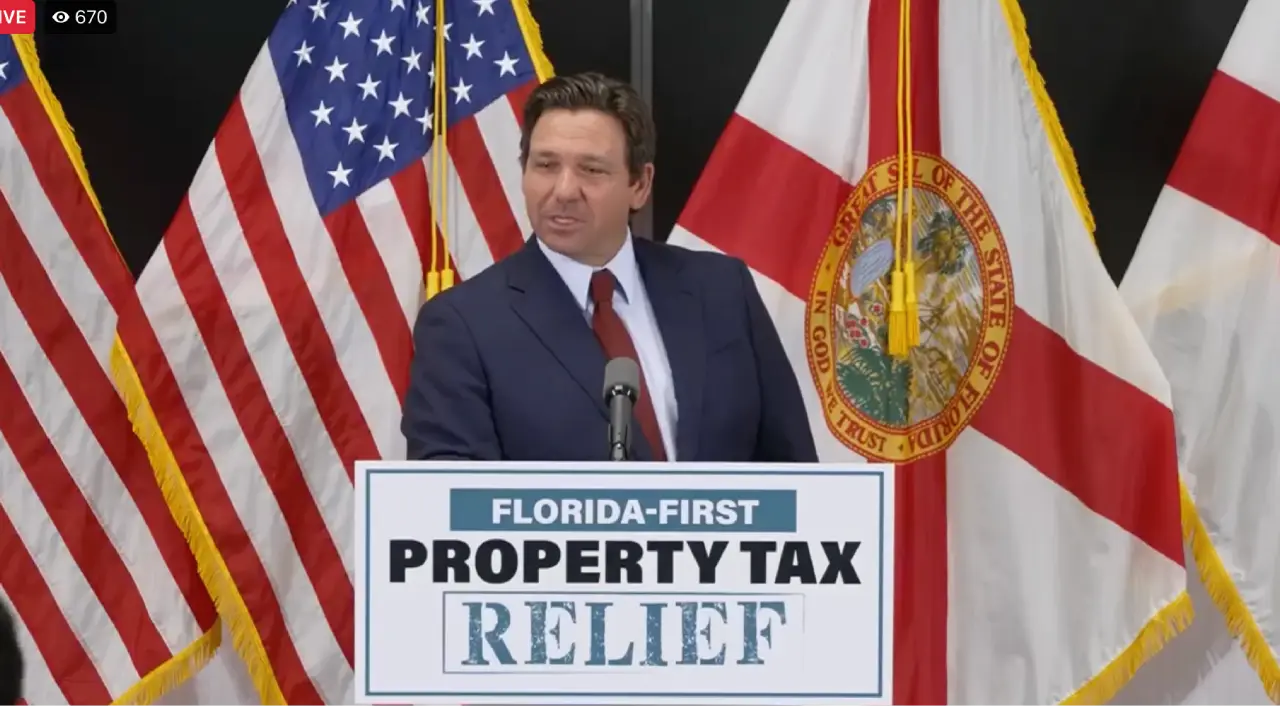
Amendment 3 would substantially increase Florida’s homestead property tax exemption while reducing the annual assessment-growth cap on non-homestead property. Supporters argue the measure would provide meaningful relief to homeowners facing rising property taxes, while opponents warn the revenue reductions could force local governments to cut services, increase fees or find other sources of revenue.
What Amendment 3 would change
Under the proposal, Florida’s homestead exemption would increase to $150,000 in 2027 and $250,000 in 2028.
The increased exemption would apply to non-school property taxes. Beginning in 2029, the exemption would be adjusted annually for inflation.
The amendment would also reduce the annual assessment-growth cap on non-homestead property from the current 10 percent to 5 percent.
New Florida residents would generally have to wait five years before qualifying for the increased exemption.
The proposal also places restrictions on how remaining local property tax revenue could be used, directing it toward designated core local services and requiring the Legislature to establish a state trust fund intended to help local governments finance those services.
Because the proposal would amend the Florida Constitution, Amendment 3 must receive at least 60 percent of the statewide vote to pass.
Public safety opposition grows
Public safety funding has become one of the most prominent arguments against the amendment.
The Florida State Fraternal Order of Police joined the opposition in July, warning that Amendment 3 could put public safety funding at risk.
The organization, which represents more than 24,000 law enforcement officers, joined firefighter organizations already raising concerns about the proposal’s potential impact on local government revenue.
The Florida Professional Firefighters and Florida Fire Chiefs’ Association have also warned that reducing property tax collections could affect the ability of cities and counties to pay for fire protection, emergency response and other essential services.
Sheriffs and other local government organizations have since added their voices to the debate, broadening what began earlier this summer as a more limited opposition campaign.
Opposition has been building for months
The latest warnings are part of an organized campaign against Amendment 3 that has steadily expanded since lawmakers placed the proposal on the November ballot.
The Florida Pundit reported in June that organized opposition was already forming against the DeSantis-backed property tax amendment, with critics arguing that the proposal could create major financial challenges for cities and counties.
The political opposition widened the following month.
In July, the Florida Democratic Party formally announced its opposition to Amendment 3, arguing that the proposal could jeopardize funding for public safety, infrastructure and other local services.
The party’s opposition added a partisan component to a debate that had initially focused largely on the financial consequences for local governments.
Since then, organizations representing police officers, firefighters and local governments have increasingly focused attention on how communities would respond if property tax collections decline.
Billions in potential revenue reductions
The financial stakes could be substantial.
Estimates cited by opponents project that Amendment 3 could reduce local government property tax revenue by approximately $5 billion in its first year and roughly $12 billion by its fifth year after implementation.
Those figures represent projected reductions in local government revenue, not necessarily equivalent reductions in government spending.
Cities and counties could respond by reducing expenditures, adjusting tax rates where legally permitted, increasing fees or changing how services are financed.
Supporters, meanwhile, argue that the same revenue reductions represent significant tax relief for Florida property owners.
That tradeoff is increasingly becoming the central question voters will face: whether the benefits of lower property taxes outweigh the potential effects on local government finances and services.
Florida property taxes have climbed
The debate is unfolding as property tax collections have risen sharply across Florida.
A recent Florida TaxWatch analysis found that statewide property tax levies increased 108.1 percent between 2014 and 2024, while the combined growth of Florida’s population and inflation totaled 54.9 percent during the same period.
Some counties experienced substantially larger increases.
Walton County recorded a 216.1 percent increase in property tax levies during the decade, while Pasco County increased 169.2 percent and Osceola County increased 157.3 percent, according to the analysis.
Those increases help explain why property tax relief has become a major political issue in Florida and why supporters of Amendment 3 argue that significant structural changes are necessary.
TaxWatch expands voter information
As the November vote approaches, Florida TaxWatch has expanded its property tax research and voter information surrounding Amendment 3.
The nonpartisan research organization has outlined the amendment’s provisions and potential consequences, including the phased increase in the homestead exemption and reduction in the assessment-growth cap for non-homestead property.
The growing amount of voter information reflects the complexity of the proposal, which goes considerably beyond simply increasing the homestead exemption.
For homeowners, Amendment 3 could produce substantial reductions in taxable value.
For cities, counties and special districts, it could fundamentally change the amount of property tax revenue available and how that revenue may be spent.
November campaign intensifies
With Election Day approaching, both sides now face the challenge of explaining those competing consequences to voters.
Supporters are expected to emphasize rising property tax bills and the savings homeowners could receive.
Opponents are increasingly focusing on police, firefighters, infrastructure and other local services that rely heavily on property tax revenue.
The expanding opposition also means Amendment 3 is moving from a Tallahassee policy fight into a statewide political campaign.
Florida voters will have the final say Nov. 3.
The amendment needs support from at least 60 percent of voters to become part of the Florida Constitution.
Related Coverage
Florida FOP Opposes Amendment 3 Over Police Funding
DeSantis Property Tax Amendment Faces Organized Opposition Ahead of November Vote
Florida Democrats Oppose Amendment 3 Property Tax Proposal Ahead of 2026 Election