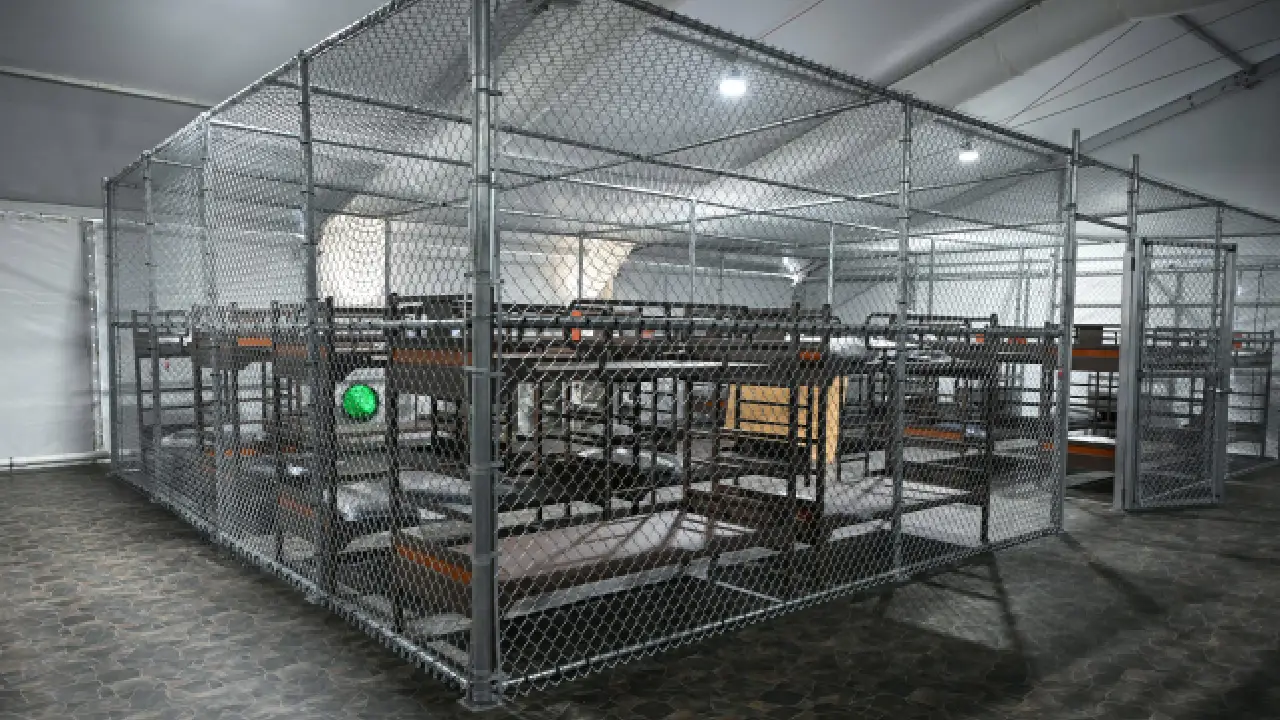
OCHOPEE, Fla. — A federal watchdog has documented cramped living quarters, restrictive metal enclosures, limited access to showers and recreation, and other problems at Florida’s now-closed immigration detention facility known as “Alligator Alcatraz.”
The Department of Homeland Security Office of Inspector General findings follow an unannounced January inspection of the Florida Soft-Sided Facility at the Dade-Collier Training and Transition Airport in the Everglades.
Inspectors concluded the facility did not comply with multiple detention standards and raised particular concerns about small metal enclosures that staff described as “calming areas.”
Between July 17, 2025, and Jan. 18, 2026, records reviewed by inspectors showed 79 detainees were placed in the enclosures, which provided approximately 18 square feet of floor space.
Detainees remained inside for periods ranging from several minutes to nearly two hours, according to the report.
The inspector general described the use of the restrictive spaces as highly unconventional and said the practice did not align with standards for humane treatment.
Inspectors raise concerns over metal enclosures
Facility staff told investigators the enclosures were intended to allow detainees to de-escalate and spend time alone.
But inspectors found at least one instance in which an enclosure may have been used as a disciplinary measure.
The watchdog said the use of such small enclosures was unprecedented among detention facilities its teams had inspected and warned that confining detainees in them presented significant risks to their health and safety.
According to records reviewed by investigators, detainees spent an average of just under an hour in the enclosures.
The findings provide federal confirmation that restrictive metal holding areas existed at the facility after detainees and advocates had previously raised allegations about a structure they called “the box.”
The inspector general, however, did not independently substantiate every allegation previously made about how detainees were treated inside the enclosures.
Detainees had less than half required living space
The metal enclosures were only one issue identified during the inspection.
Investigators found that detainees spent most of their time in windowless housing units that provided approximately 28 square feet of floor space per detainee when filled to capacity.
The report compared that figure with a minimum of 75 square feet per detainee under applicable Florida jail standards.
Inspectors concluded the facility did not provide sufficient living space and warned that the cramped conditions could harm detainees’ physical and mental health.
The housing units did not include common areas, leaving detainees with limited opportunities to move outside their assigned living spaces.
The findings add another layer of scrutiny to a facility that became a centerpiece of Florida’s partnership with the federal government on immigration enforcement.
The Florida Pundit previously reported that Florida faced allegations it withheld evidence related to its pursuit of federal funding for Alligator Alcatraz during litigation over the Everglades facility.
Showers, drinking water and recreation questioned
Inspectors also documented deficiencies involving hygiene and recreation.
Detainees told investigators they did not have reliable access to clean drinking water, while inspectors observed issues involving the availability of drinking cups.
The report also found detainees generally received showers only three times per week.
Inspectors observed small insects in the shower areas.
Recreation was similarly limited.
According to the watchdog, detainees generally received approximately one hour of recreation three days per week, less than the amount contemplated under applicable detention standards.
Because detainees spent much of the remainder of their time inside crowded housing units, inspectors said the limited recreation compounded concerns about living conditions.
Legal access also raised concerns
The report identified problems with detainees’ access to legal resources.
Inspectors found the facility did not provide adequate access to legal information and materials required under detention standards.
Access to legal counsel had been a point of controversy throughout the facility’s operation, with immigration attorneys and advocacy organizations previously raising concerns about their ability to communicate with detainees.
The inspector general’s findings now provide an official assessment of some of the broader legal-access deficiencies at the facility.
Inspectors also identified shortcomings involving environmental health and safety, medical services, food service and personal hygiene, although the facility complied with certain intake and use-of-force requirements examined during the inspection.
Unclear standards complicated oversight
One of the broader problems identified by investigators involved uncertainty over exactly which detention standards governed the state-operated facility.
Alligator Alcatraz was operated by Florida while holding detainees in federal immigration custody.
DHS maintained that Florida was responsible for day-to-day operations and said the department did not have a contract with the state to manage detention space at the facility.
The inspector general noted, however, that detainees received ICE handbooks identifying the location as an ICE detention facility and that federal immigration personnel were involved at the site.
Facilities housing ICE detainees are required to comply with applicable detention standards.
The state-federal distinction has been a recurring issue surrounding Alligator Alcatraz, including in litigation over environmental review and federal funding.
DHS rejects claims of inhumane conditions
The Department of Homeland Security pushed back against the report’s characterization of conditions.
In a statement responding to the findings, DHS said Alligator Alcatraz was consistent with federal detention standards used under previous administrations and rejected allegations that detainees were subjected to inhumane conditions.
Florida officials have also defended the facility.
Gov. Ron DeSantis said Monday that he had not read the inspector general report but argued that criticism of the detention center has repeatedly been characterized negatively regardless of how Florida operated it.
DeSantis’ communications director, Alex Lanfranconi, separately defended the confinement area, arguing it was used for detainees who could not remain peaceful while awaiting deportation and maintaining that the facility complied with federal standards.
The conflicting assessments underscore the dispute that followed Alligator Alcatraz from its opening through its closure.
Facility closed in June
Florida opened the temporary detention facility in 2025 at the remote Dade-Collier airport as part of its expanded cooperation with federal immigration enforcement.
President Donald Trump, DeSantis and federal officials toured the site shortly before it began receiving detainees.
The facility quickly became one of the most visible — and controversial — symbols of the administration’s immigration enforcement campaign.
Environmental organizations challenged construction and operation of the detention center, while immigrant-rights advocates and detainees raised concerns about conditions inside.
Florida officials consistently defended the operation and argued it provided needed detention capacity for federal immigration enforcement.
The facility ceased operations in June 2026.
DeSantis announced the closure of Alligator Alcatraz after nearly a year of operation, saying the temporary facility had “served its purpose.”
Miami-Dade County subsequently regained control of the Dade-Collier Training and Transition Airport after the state ended detention operations there.
Questions continue after Alligator Alcatraz closes
Closure of the facility did not end scrutiny surrounding its operation.
The inspector general’s findings provide one of the most detailed federal examinations to date of conditions inside the detention center and establish that some practices criticized by detainees and advocates did occur, including the use of unusually restrictive metal enclosures.
At the same time, the report does not substantiate every allegation previously made against the facility, and state and federal officials continue to dispute claims that detainees were treated inhumanely.
The watchdog issued recommendations addressing the metal enclosures, drinking water, living space, recreation, hygiene and other deficiencies.
The report nevertheless leaves broader questions about accountability and oversight when state governments operate detention facilities housing people in federal immigration custody.
Those questions could remain relevant as Florida continues cooperating with federal authorities on immigration enforcement elsewhere in the state.
Related Coverage
New Filing Alleges Florida Withheld Alligator Alcatraz Funding Evidence
DeSantis Closes ‘Alligator Alcatraz’ After One Year, Says Detention Center ‘Served Its Purpose’
Miami-Dade Regains Control of Former ‘Alligator Alcatraz’ Site After State Closes Detention Camp