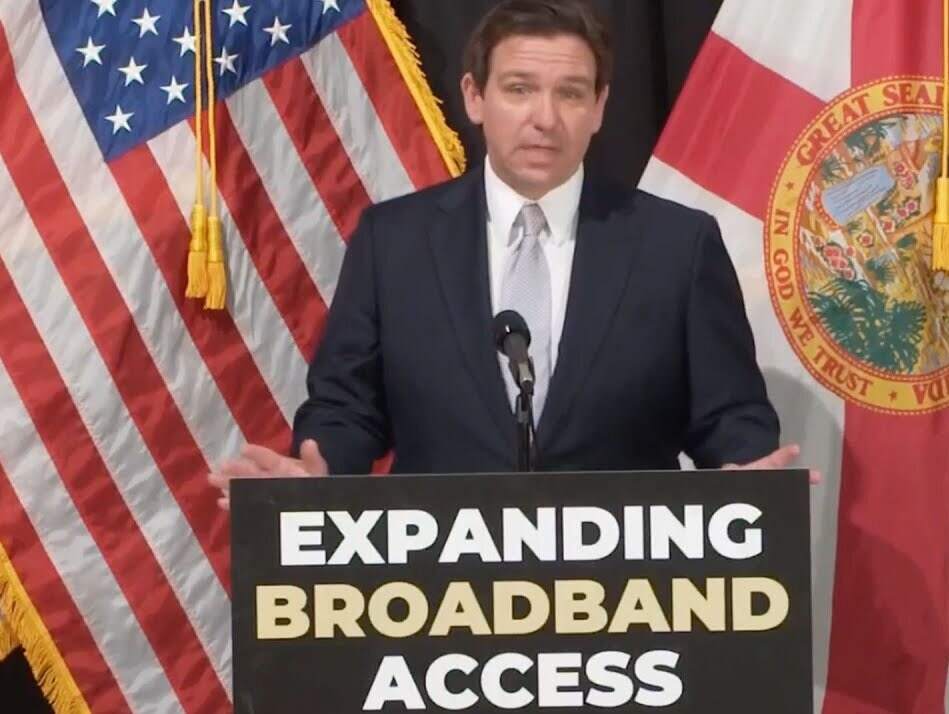

BOWLING GREEN, Fla. — Florida Gov. Ron DeSantis announced nearly $223 million in Florida rural broadband funding and connected community-facility projects on Feb. 2, 2024, targeting small towns and areas without reliable high-speed internet.
The package combined two programs with different funding sources and purposes: approximately $135 million in state funding through the Broadband Opportunity Program and approximately $86 million in federal funding through the Multipurpose Community Facilities Program.
The component figures were rounded in the announcement, which is why they add up to $221 million even though the state described the total package as nearly $223 million.
Two Programs With Different Purposes
The Broadband Opportunity Program received approximately $135 million for 54 projects across 33 Florida counties.
According to the Executive Office of the Governor, those projects were expected to extend service to more than 27,000 unserved residential, educational, agricultural, business and community locations.
FloridaCommerce administers the program, which helps finance the construction and deployment of broadband infrastructure in areas where private service has been unavailable or inadequate.
The second portion consisted of approximately $86 million in federal funding through the Multipurpose Community Facilities Program. That program supported 29 projects across 18 counties involving health clinics, schools, community centers and workforce-development facilities.
The funding came through the U.S. Treasury’s Capital Projects Fund. FloridaCommerce reported that the federal allocation for the program totaled approximately $86.9 million.
That distinction matters: not all of the nearly $223 million was designated for extending residential broadband lines. A substantial portion funded buildings where residents could access internet-connected health, education and employment services.
Awards Did Not Mean Immediate Connections
The numbers released in February 2024 described the anticipated reach of the funded projects. They did not mean that all 27,000 locations received active broadband service on the day of the announcement.
Grant recipients still had to complete construction, install equipment, meet program requirements and activate service. Actual availability therefore depended on individual project schedules and local implementation.
The investments were intended to improve access to telehealth appointments, remote education, workforce training, agricultural technology and online business services in communities where limited connectivity can restrict economic opportunities.
DeSantis Challenged FCC Broadband Rules
The announcement also became part of a political dispute over federal broadband policy.
DeSantis’ administration criticized digital-discrimination rules adopted by the Federal Communications Commission in November 2023, arguing that the requirements could discourage private companies from investing in rural communities.
The administration’s position should be identified as its argument—not presented as an established effect of the rules.
The FCC said its rules were intended to prevent unequal broadband access based on income level, race, ethnicity, color, religion or national origin. The commission also said legitimate technical and economic limitations would be considered when reviewing whether a provider’s practices violated the rules.
Part of a Broader Florida Broadband Effort
The February 2024 awards followed several other rounds of state broadband spending.
In 2023, Florida announced more than $226 million through earlier Broadband Opportunity Program awards. The state said those projects were intended to affect more than 250,000 homes and businesses across 53 counties.
Florida also announced more than $247 million through the separate Broadband Infrastructure Program for 63 projects across 43 counties. Those projects were projected to reach more than 59,000 unserved or underserved homes, businesses, farms, hospitals, libraries and other community institutions.
Together, the programs represented a significant expansion of Florida’s public investment in internet infrastructure. They also demonstrated why broadband grants should be evaluated through both award announcements and subsequent completion reports.
Reliable service can support rural economic development, but the ultimate measure is whether funded construction produces affordable, dependable connections for the Floridians the programs were created to serve.
Related Coverage
- Florida Passes $114.5 Billion Budget as DeSantis Threatens New Veto Cuts
- Florida Economy Ranks Among Top 10 States in America
- What Florida’s New Data Center Law Means for Homeowners and Communities
Editor’s note: This article was substantially revised on Aug. 2, 2026, to clarify the funding sources, distinguish broadband infrastructure from community-facility grants and accurately describe the dispute over FCC rules.