
Miami city officials are pushing a new ballot measure that would give them sweeping authority to sell or lease public land valued at more than $500,000 without the consent of voters — a move critics warn could weaken transparency and reduce citizen oversight.
The measure, listed as Referendum No. 2, would amend Miami’s city charter and allow the five-member City Commission to approve land sales by a four-fifths vote when the city fails to receive at least three bids, which is currently required under existing rules.
A Shift of Power Away From Voters
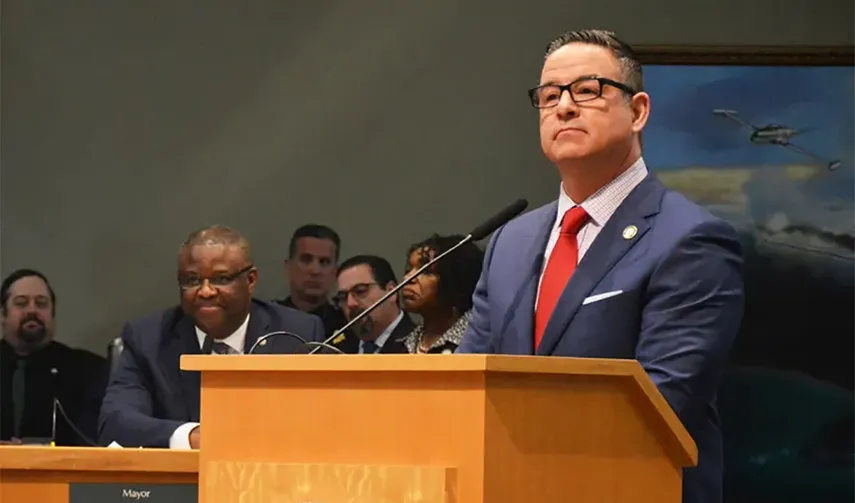
The proposal was introduced by City Manager Art Noriega, who called it a “necessary modernization” to help the city dispose of “undesirable” or underused properties.
“It gives us flexibility to move surplus land faster,” Noriega said. Yet he could not name a single property that would immediately benefit from the change.
Under current law, Miami must seek voter approval through a referendum before selling valuable non-waterfront properties if fewer than three offers are received.
If passed, city commissioners could bypass that requirement entirely.
Timing Raises Eyebrows
The timing of the measure has sparked criticism. The Noriega administration has recently faced scrutiny over controversial deals involving two iconic city assets — the Olympia Theater, sold to a charter school, and the stalled Miami Marine Stadium restoration project.
While the proposed amendment would not directly impact those properties, opponents argue the pattern is clear: City Hall wants fewer checks on its real estate decisions.
“Miami taxpayers deserve a say when public property is on the line,” said one resident group opposing the measure. “This is about trust — and we don’t have much left in City Hall.”
City Owns $17.5 Billion in Public Property
Miami’s real estate portfolio includes more than 500 properties worth roughly $17.5 billion — from parks and theaters to office buildings and parking lots.
Currently, the city must publicly advertise any sale of land worth over $500,000 and secure at least three bids before moving forward.
If the new rule passes, commissioners could approve sales even when fewer than three offers are received — so long as the property is appraised at fair market value and four of the five commissioners agree.
Noriega argues the three-bid rule has made it “nearly impossible” to sell certain properties.
He cited two vacant lots in The Roads neighborhood as examples, where the city received only one offer despite listing them twice.
Commissioners Split Over the Proposal
City commissioners voted unanimously in July to place the measure on the ballot, but opinions are divided as Election Day nears.
District 1 Commissioner Miguel Ángel Gabela supports the change, saying it could save the city time and money by avoiding special elections for every land sale.
District 2 Commissioner Damian Pardo echoed that sentiment, calling the current process “a long-standing obstacle.”
But others are not convinced.
District 3 Commissioner Joe Carollo said he was told the measure would apply only to “small parcels.”
“If it’s not just small lots, I can’t support it,” Carollo said.
District 5 Commissioner Christine King went further, arguing that stripping voters of their right to approve major land deals “goes against the principle of public ownership.”
“These properties belong to Miami’s residents, not to politicians,” King said.
Other Cities Offer Mixed Examples
Supporters say the plan would align Miami’s rules with nearby municipalities like Miami Beach and Hialeah, where commissions can approve certain land sales without a public vote.
However, those cities still require stricter oversight for high-value or waterfront properties.
Even if passed, Miami’s waterfront properties — such as the Miami Marine Stadium and Watson Island — would still need voter approval before being sold or leased.
Bottom Line
Critics see the referendum as another power grab by city leaders already under fire for mismanaging public assets.
Proponents say it’s about efficiency and cutting red tape.
Miami voters will make the final call next week.
Whether they’ll hand over more control to City Hall — or keep it in their own hands — remains to be seen.