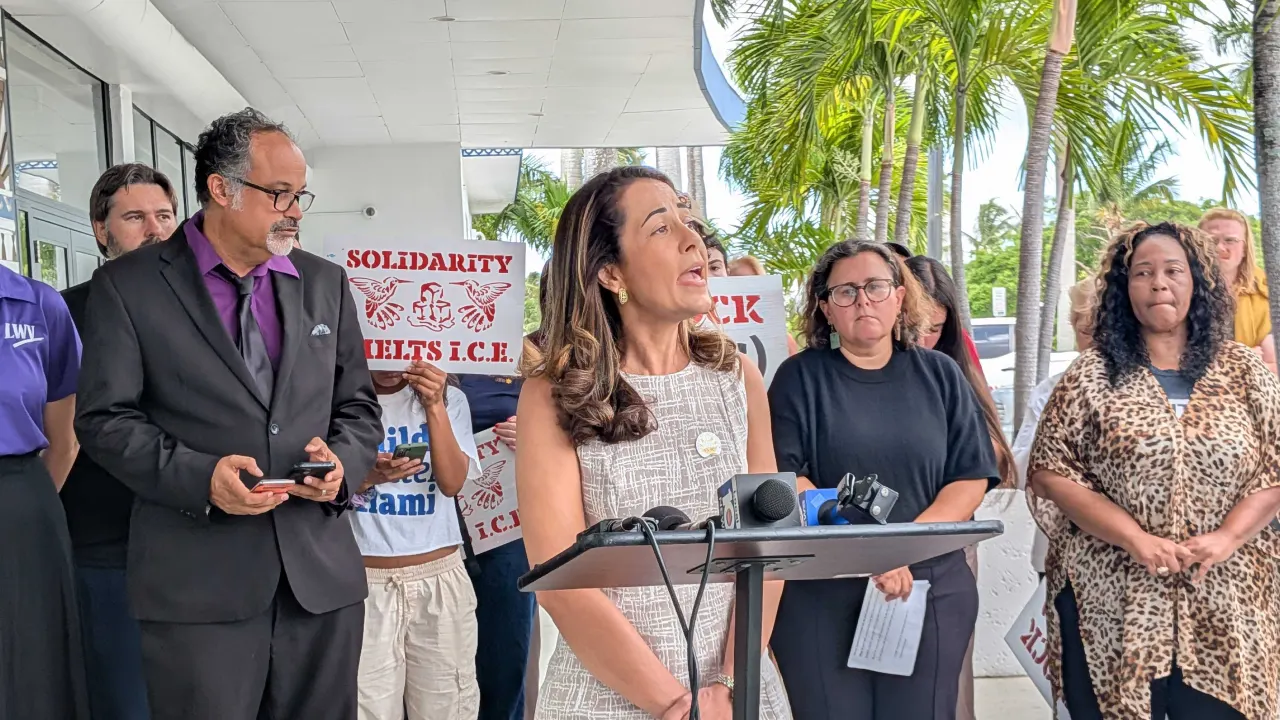
MIAMI, Fla. — Pressure is mounting on the Miami City Commission to end the city’s partnership with U.S. Immigration and Customs Enforcement (ICE) after hours of emotional public testimony from residents, immigration advocates and community leaders who urged officials to withdraw from the federal 287(g) program.
During a lengthy City Commission meeting, dozens of residents urged commissioners to withdraw from the city’s participation in the federal 287(g) program, which authorizes specially trained local law enforcement officers to assist with certain federal immigration enforcement functions. Speakers argued the agreement has created fear among immigrant families and discouraged cooperation with local police.
Florida has encouraged local governments to participate in ICE’s 287(g) program as part of the state’s broader immigration enforcement policies adopted in recent years. Several local agencies across Florida have entered similar agreements with the federal government.
Although commissioners did not vote to terminate the agreement, the meeting marked a significant political shift. Three of Miami’s five commissioners — Christine King, Rolando Escalona and Damian Pardo — publicly stated they would support ending the partnership if it can be done without violating Florida law.
The agreement was approved by the Miami City Commission in 2025 during former Mayor Francis Suarez’s administration. Since then, Miami’s political landscape has changed, including the election of Mayor Eileen Higgins, who has previously expressed concerns about the program.
Commissioners Balance Public Safety and State Law
City Attorney George Wysong cautioned commissioners that withdrawing from the agreement could expose Miami to legal challenges or financial penalties from the state, noting the city receives millions of dollars annually in state funding.
Miami Police Chief Edwin López and City Manager James Reyes emphasized that the city’s participation remains limited. According to city officials, only two Miami police detectives have been trained under the 287(g) agreement, and immigration status has not served as the basis for criminal charges or routine policing activities.
Officials also stressed that Miami police officers are not conducting immigration sweeps or routinely asking residents about their legal status during everyday encounters.
Community Opposition Continues to Grow
Advocates argued that regardless of how frequently the program is used, its existence has had a chilling effect throughout Miami’s immigrant neighborhoods.
Residents, students, clergy and advocacy organizations packed City Hall during public comment, describing widespread fear among mixed-status families and warning that the city’s participation could erode trust between law enforcement and the communities they serve.
Commissioner Rolando Escalona, himself an immigrant from Cuba, became emotional during the discussion, saying the debate extends beyond the technical operation of the agreement and centers on the anxiety many immigrant families now feel.
What Happens Next?
The commission took no formal action during the meeting, but the public discussion suggests the issue is unlikely to disappear.
Whether Miami ultimately withdraws from the agreement may depend less on local political support than on how Florida’s state laws governing cooperation with federal immigration authorities are interpreted and enforced.
For now, city officials appear caught between growing community opposition and the legal risks of reversing course.
The issue is expected to return before the commission in the coming months as city officials continue evaluating the legal and financial implications of remaining in, modifying, or withdrawing from the federal partnership.
Related Coverage
- Wasserman Schultz Reports ‘Horrific’ Conditions After Surprise Inspection of Miramar ICE Facility
- Miami-Dade Spending Under Fire as Florida Lawmakers Demand Greater Accountability
- New Florida Laws Taking Effect July 1: What Residents Need to Know
Sources
Primary Sources
- City of Miami — City Commission
- City of Miami Commission Meeting Agendas and Minutes
- U.S. Immigration and Customs Enforcement — 287(g) Program
📬 Never Miss Florida’s Biggest Political Stories
Get breaking Florida politics, investigations, elections, government accountability reporting, and every edition of DOME Briefing delivered directly to your inbox.