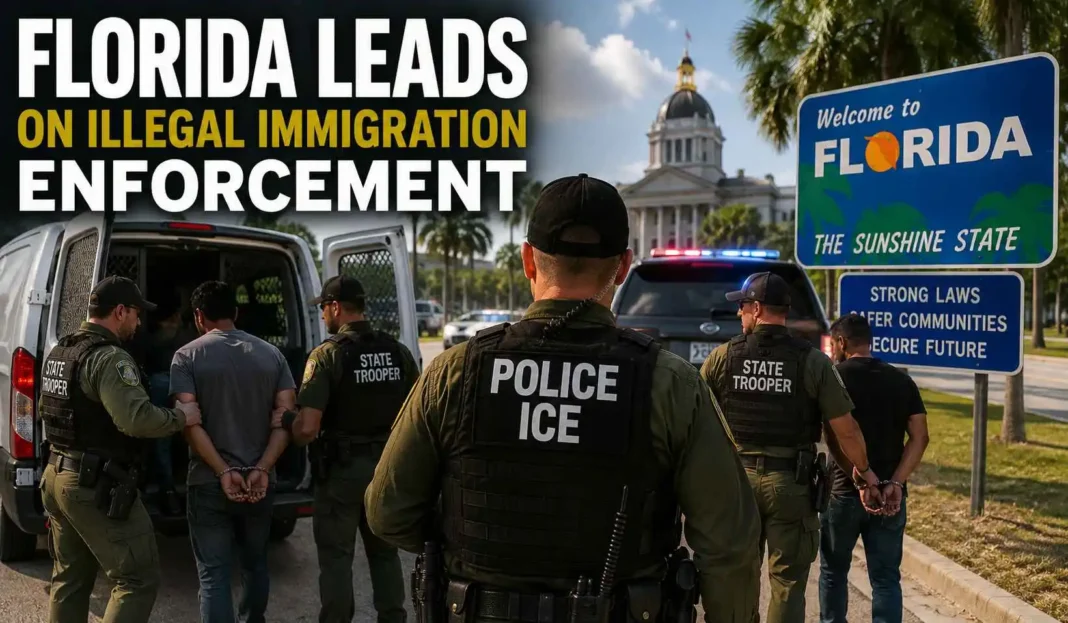

TALLAHASSEE, Fla. — Florida has emerged as the national leader in state-level immigration enforcement, with state officials highlighting a growing partnership with federal agencies aimed at identifying, detaining, and removing individuals living in the United States illegally.
Governor Ron DeSantis and state law enforcement leaders say Florida’s aggressive approach has become a model for other states seeking to strengthen immigration enforcement amid ongoing concerns over border security and illegal migration.
Over the past several years, Florida lawmakers have approved a series of measures designed to increase cooperation between local law enforcement agencies and federal immigration authorities. State officials argue the policies have enhanced public safety while reinforcing the rule of law.
“Florida is demonstrating that states do not have to sit on the sidelines while the federal government addresses illegal immigration,” one state official said during a recent briefing on enforcement efforts.
Expanded Cooperation with Federal Agencies
Florida has significantly expanded participation in federal immigration programs that allow trained local officers to assist federal authorities in identifying and processing undocumented immigrants who are arrested for criminal offenses.
The state’s law enforcement agencies have increased information-sharing agreements with federal partners, resulting in a greater number of immigration detainers and transfers to federal custody.
Supporters of the effort argue that stronger enforcement discourages illegal immigration while helping remove individuals who pose risks to public safety.
State leaders have also directed additional resources toward combating human trafficking, drug smuggling, and transnational criminal organizations operating within Florida.
Record Enforcement Efforts
According to state officials, Florida now has more law enforcement agencies participating in immigration-related cooperation agreements than any other state.
The administration has pointed to multiple operations involving state troopers, local sheriff’s offices, and federal authorities that resulted in arrests connected to immigration violations and criminal activity.
Advocates of the policy say the state’s actions send a clear message that immigration laws will be enforced consistently.
The enhanced efforts come as national debate continues over border security, asylum policies, and the role states should play in immigration enforcement.
Economic and Political Impact
Immigration remains one of the most influential political issues in Florida and across the nation.
Supporters of stronger enforcement argue that illegal immigration places pressure on public services, schools, healthcare systems, and housing markets. They contend that enforcing existing laws protects taxpayers and legal immigrants who follow established pathways to enter the country.
Critics, however, argue that aggressive enforcement measures may create labor shortages in industries such as agriculture, construction, hospitality, and tourism.
Business leaders continue to monitor the effects of immigration policies on workforce availability as Florida’s economy continues to grow.
National Spotlight
Florida’s approach has drawn attention from policymakers nationwide, particularly as immigration remains a central issue in federal elections and congressional debates.
Several states have explored adopting policies similar to Florida’s enforcement model, while supporters point to the state’s declining crime rates and strong economic performance as evidence that stricter immigration enforcement can coexist with economic growth.
As the national immigration debate intensifies, Florida’s role as a testing ground for aggressive enforcement policies is likely to remain at the center of discussions about border security and state-federal cooperation.
With immigration expected to remain a major issue throughout 2026, Florida’s actions may continue shaping the national conversation on how states can participate in enforcing federal immigration laws.