Editor’s Note (Updated Aug. 4, 2026)
Following the hearing detailed below, Leon County Circuit Judge Angela Dempsey ruled that the proposed Property Tax Amendment ballot title and summary are legally defective and ordered Attorney General James Uthmeier to prepare revised ballot language before the measure appears on the November general election ballot.
Read our follow-up coverage:
Florida Judge Orders Property Tax Amendment Ballot Language Rewritten
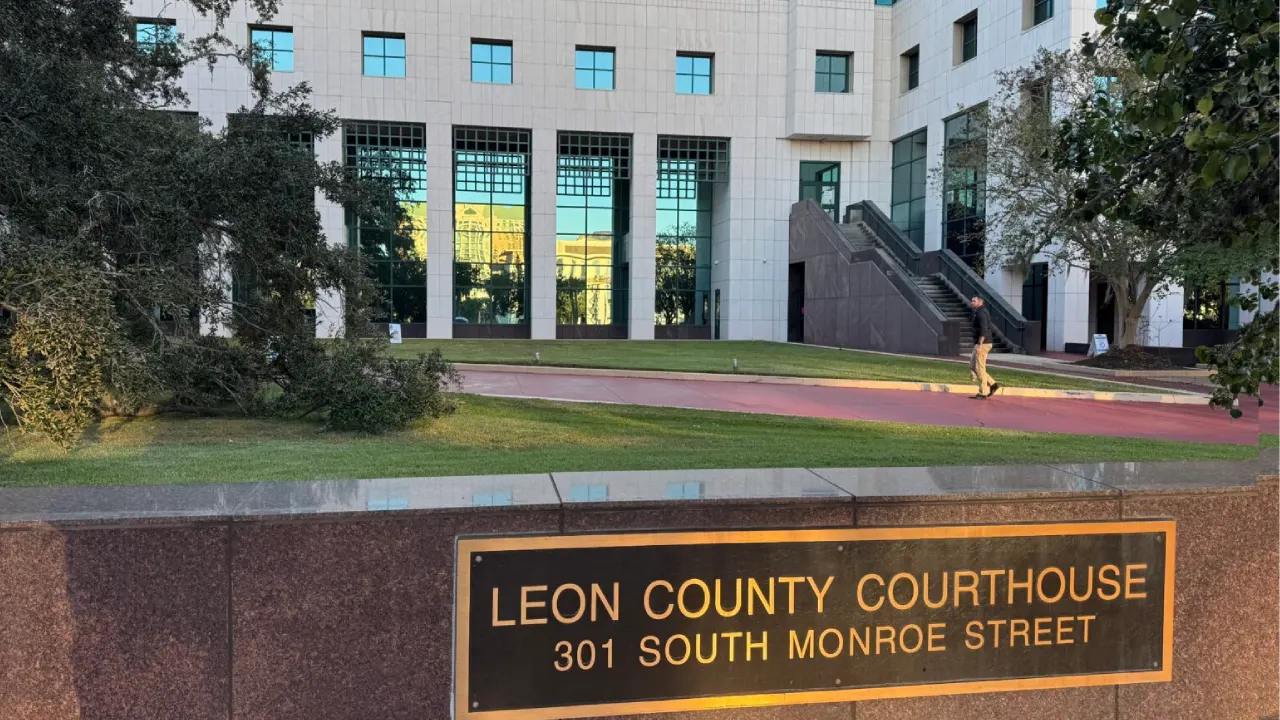
TALLAHASSEE, Fla. — A Leon County judge heard arguments Wednesday in a lawsuit challenging the ballot language for Florida’s proposed property tax amendment, a closely watched case that could determine whether voters see revised wording before the Nov. 3 general election.
The lawsuit does not seek to remove the proposed constitutional amendment from the ballot. Instead, the plaintiffs contend the ballot title and summary approved by the Florida Legislature violate state law by promoting the measure rather than fairly informing voters of its chief purpose.
Circuit Judge Angela Dempsey heard arguments from both sides in Leon County Circuit Court. No ruling was issued from the bench, and the court did not indicate when a written decision would be released.
The case, filed by Save Our Voters From Misleading Ballot Language, Inc. and several former local elected officials, names the Florida Department of State and Secretary of State as defendants and asks the court to declare the ballot language legally insufficient.
Circuit Judge Angela Dempsey heard arguments from both sides Wednesday in Leon County Circuit Court. No ruling was issued from the bench.
Lawsuit Challenges Ballot Title and Summary
According to the complaint, the plaintiffs argue the ballot title—
“Save Our Homes From Excessive Property Taxes”
—is not a neutral description but a political slogan designed to persuade voters.
The lawsuit further argues the ballot summary contains advocacy by stating the amendment would “benefit Florida taxpayers” while “ensuring funding for core services.” Plaintiffs contend those statements are policy arguments rather than objective explanations of the amendment’s legal effect.
Florida law requires constitutional amendment ballot titles and summaries to provide voters with clear and unambiguous notice of a proposal’s chief purpose without misleading or influencing the electorate.
Attorneys representing the state argued Wednesday that the ballot language satisfies Florida’s legal requirements and accurately summarizes the amendment approved by lawmakers during the 2026 Special Session.
What the Proposed Amendment Would Do
The proposed constitutional amendment originated as CS/HJR 1-F during the 2026 Special Session of the Florida Legislature.
If approved by at least 60 percent of voters, the amendment would expand Florida’s homestead property tax exemption while establishing a constitutional framework for additional property tax relief in future years.
According to the official House joint resolution, the amendment would increase homestead tax benefits for qualifying homeowners while directing the Legislature to consider additional reductions to county and municipal property taxes through future implementing legislation.
A plain-language explanation prepared by Leon County Government notes that school district property taxes would not be eliminated by the proposal because they are governed by separate constitutional provisions. The county also explains that homeowners with existing homestead exemptions would generally receive the greatest immediate benefit, while renters would not receive direct property tax savings.
Debate Extends Beyond the Courtroom
The lawsuit arrives as the proposed amendment continues generating debate across Florida.
Supporters say the proposal would reduce the property tax burden on homeowners as property values continue to rise across much of Florida.
Opponents, including several local government organizations and public safety advocates, warn significant reductions in property tax revenue could affect funding for law enforcement, fire rescue, emergency medical services, infrastructure and other essential local government operations unless replacement revenue is identified.
Earlier this month, The Florida Pundit reported that Sen. Rick Scott endorsed the proposed amendment, calling property tax relief a priority while emphasizing the need to preserve funding for essential public services.
The proposal has also drawn opposition from the Florida State Fraternal Order of Police, which warned uncertainty surrounding local government funding could affect public safety budgets.
Firefighter organizations have likewise expressed concerns over the potential fiscal impact on local governments responsible for emergency response services.
Judge Weighs Legal Sufficiency of Ballot Language
Florida courts routinely review ballot language for proposed constitutional amendments to determine whether voters receive an accurate and impartial explanation before casting ballots.
The legal question before the court is not whether eliminating or reducing property taxes is good public policy. Instead, the judge must determine whether the ballot title and summary comply with constitutional and statutory standards governing citizen information at the ballot box.
If the court finds the language legally insufficient, state election officials could be required to revise the ballot wording before ballots are finalized for the November election. Either side could also seek appellate review.
What Happens Next
Editor’s Note: Judge Dempsey subsequently issued a written ruling ordering the ballot language rewritten. Readers can find that coverage here: Florida Judge Orders Property Tax Amendment Ballot Language Rewritten
The court’s decision could determine whether Florida voters see revised ballot language before deciding one of the most consequential constitutional proposals on the Nov. 3 general election ballot. Readers can follow continuing coverage of statewide races, ballot measures, campaign finance, and election developments in The Florida Pundit’s Florida Elections 2026 Hub.
Regardless of the lawsuit’s outcome, the proposed amendment must still receive at least 60% voter approval on Nov. 3 to become part of the Florida Constitution.
Sources
- Complaint for Declaratory Relief — Save Our Voters From Misleading Ballot Language, Inc., et al. v. Florida Department of State, et al., Second Judicial Circuit, Leon County.
- Florida House of Representatives — CS/HJR 1-F, Save Our Homes From Excessive Property Taxes (2026 Special Session).
- Leon County Government — Florida’s Property Tax Amendment: What It Means for Leon County’s Residents (In Plain English).
- Leon County Circuit Court — Hearing proceedings and court filings.
- Florida Department of State, Division of Elections
- Florida Constitution, Article XI
Related Coverage
- Rick Scott Backs Florida Property Tax Amendment
- Florida FOP Opposes Amendment, Warns of Public Safety Funding Risks
- Florida Elections 2026
- Politics
ARCHIVED COVERAGE
This article documents the July 29, 2026 hearing in Leon County Circuit Court. For the court’s final ruling, read:
Florida Judge Orders Property Tax Amendment Ballot Language Rewritten