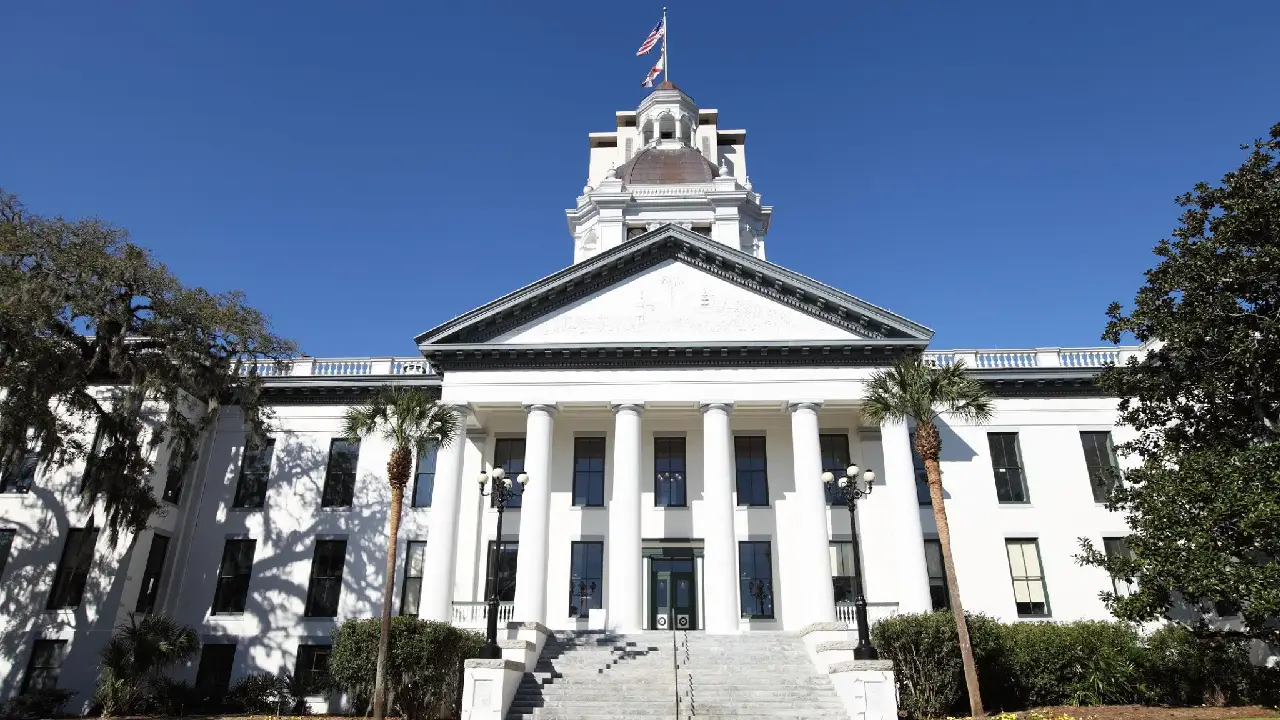
Florida Republicans emerged victorious in the state’s November 3 midterm elections, securing the governor’s office and maintaining control of the Legislature. However, Democratic gains in the Florida House significantly narrowed the Republican majority and ended the party’s two-thirds supermajority.
The results represent a consequential shift in Tallahassee, where Republicans have exercised substantial legislative power in recent years.
Republican Byron Donalds defeated Democrat David Jolly in the gubernatorial contest, according to unofficial results published by the Florida Division of Elections. Donalds received approximately 50.02% of the vote, compared with Jolly’s 48.71%.
The closely contested race underscored the competitiveness of Florida’s political landscape despite the state’s Republican registration advantage.
Florida Division of Elections — Governor Results
Democrats Make Significant Gains in Florida House
The most consequential legislative development was the Democratic Party’s expansion of its representation in the Florida House.
Unofficial projections indicate Republicans will hold approximately 70 seats in the 120-member chamber, while Democrats are expected to hold 50 seats.
Before the election, Republicans held a supermajority that enabled the party to exercise extraordinary control over legislative proceedings.
Democrats gained approximately 15 seats, with an additional contest potentially subject to a recount.
The results represent a substantial improvement for Florida Democrats, who had struggled to compete effectively in many legislative districts during previous election cycles.
WUSF — Florida Republicans Lose State House Supermajority
What the Loss of a Supermajority Means
Republicans will continue to control the Florida House, but the reduced majority could have meaningful consequences.
A two-thirds supermajority provides lawmakers with the votes needed to override gubernatorial vetoes and approve certain procedural measures without bipartisan support.
With Republicans falling below that threshold, Democrats could gain greater leverage in legislative negotiations.
The change does not give Democrats control of the chamber. Republicans retain the majority and are expected to continue advancing much of their legislative agenda.
However, the new balance of power could make negotiations over education, property taxes, state spending, immigration, and other contentious issues more complicated.
Florida Phoenix — Democrats Break Florida House Supermajority
Republicans Retain Control of the Florida Senate
Republicans also maintained control of the Florida Senate, although Democrats made gains there as well.
Unofficial projections place the Senate at approximately 25 Republicans and 14 Democrats, with one vacancy remaining.
Democratic John Lowndes defeated Republican incumbent Jason Brodeur in Senate District 10, marking a significant Democratic pickup.
The Senate results indicate that while Florida voters delivered meaningful gains to Democrats, the party remains short of obtaining legislative control.
Florida Election Watch — Legislative Projection
A Warning Sign for Florida Republicans?
The election results raise questions about the durability of Republican dominance in Florida.
Democratic gains in legislative districts, combined with the close gubernatorial contest, suggest that affordability concerns, voter turnout, and changing political attitudes may be influencing electoral outcomes.
However, the results should not automatically be interpreted as a statewide Democratic realignment.
Republicans maintained control of the governor’s office and both legislative chambers. The election demonstrated that Florida remains politically competitive in selected races, while the GOP retains a substantial institutional advantage.
The outcome could nevertheless influence how Republican lawmakers approach the upcoming legislative session.
The Bottom Line
Florida Republicans won the governor’s race and retained control of the Legislature, but Democrats significantly narrowed the GOP’s legislative advantage.
The loss of the House supermajority represents a major political development for Tallahassee, potentially increasing the importance of bipartisan negotiations and making certain legislative actions more difficult.
The question heading into the next legislative session is whether Republicans will continue governing as they have in recent years or adjust their approach to a Legislature in which Democrats have gained substantially more influence.
RELATED COVERAGE
- Florida Elections 2026
- Florida Legislature and Tallahassee Politics
- Florida Governor’s Race 2026