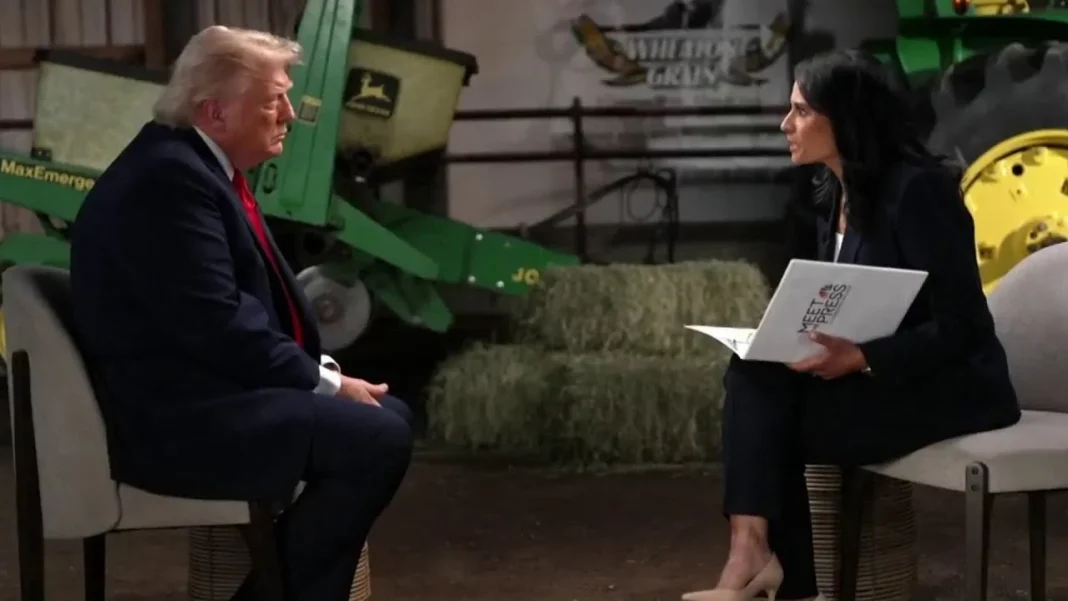

WASHINGTON, D.C. — President Donald Trump abruptly ended an interview with NBC’s Meet the Press on Sunday after a heated exchange with host Kristen Welker over election integrity, vote counting procedures, and media bias.
The interview grew increasingly tense as Welker repeatedly challenged Trump’s claims regarding election administration and public confidence in the electoral process. Trump pushed back, arguing that many Americans continue to have legitimate concerns about election transparency and accusing major media organizations of dismissing those concerns.
During the exchange, Trump criticized NBC News and the program itself, describing both as “crooked” before ending the interview early.
The confrontation escalated after several rounds of questioning on election-related issues and media coverage of Trump’s second administration. According to reports, Trump eventually removed his microphone, announced he had “had enough,” and walked off the set before the interview concluded.
The dramatic ending quickly became one of the most talked-about political moments of the weekend, generating significant reaction across social media and cable news networks.
Another Clash Between Trump and the Media
The incident represents the latest chapter in Trump’s long-running battle with major national media organizations.
Since entering politics, Trump has frequently accused mainstream news outlets of unfair coverage and political bias. Supporters argue the president continues to challenge what they view as a media establishment disconnected from everyday Americans, while critics contend journalists have a responsibility to aggressively question public officials and fact-check controversial claims.
Sunday’s confrontation highlighted the ongoing divide between Trump and many national news organizations, a dynamic that has remained a defining feature of American politics for nearly a decade.
Why It Matters
The exchange comes as questions surrounding media credibility, election administration, and public trust remain central issues in national political debate.
With the 2026 midterm elections approaching, political observers expect those issues to continue dominating conversations among voters across the country.
Whether viewed as a defense against media bias or a rejection of tough questioning, Trump’s decision to end the interview ensured that a routine Sunday political appearance became a major national headline.