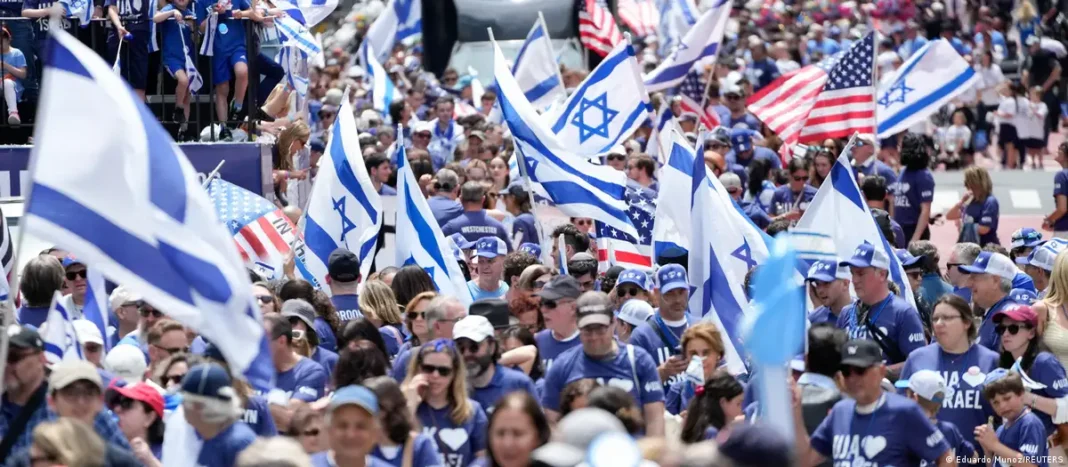

NEW YORK — New York City Mayor Zohran Mamdani declined to attend the city’s annual Israel Day Parade on Sunday, breaking with a longstanding tradition observed by generations of New York political leaders and sparking renewed controversy over his stance on Israel and the Palestinian cause.
For decades, the parade along Fifth Avenue has been considered a major political event in New York, regularly attracting mayors, governors, members of Congress, and other elected officials seeking to demonstrate support for Israel and engage with one of the nation’s largest Jewish communities.
Mamdani, however, had previously announced during his campaign that he would not participate in the event, citing his long-held views regarding the Israeli government and Palestinian rights.
Mayor Stands By Decision
Speaking earlier in the week, Mamdani reaffirmed his decision to stay away from the parade while emphasizing his commitment to ensuring public safety during the event.
“I said on the campaign trail that I wouldn’t be attending the parade, and I’ve made my views on the Israeli government abundantly clear,” the mayor said.
Despite his absence, the city deployed a significant police presence along the parade route to ensure the event proceeded safely and without disruption.
New York City Police Commissioner Jessica Tisch attended the parade, publicly stating that while the mayor made his own decision, she intended to participate and show support for the event.
Controversy Over Nakba Commemoration
The controversy surrounding Mamdani intensified earlier this month when City Hall released a video recognizing the Nakba, an Arabic term meaning “catastrophe” that refers to the displacement of hundreds of thousands of Palestinians during the 1948 Arab-Israeli war following Israel’s establishment.
The video featured personal testimony from a Palestinian woman describing her family’s displacement and reflected on the lasting impact of the conflict on Palestinian communities.
Supporters praised the video as an acknowledgment of an important historical event often overlooked in American political discourse.
Critics, however, argued that the presentation lacked broader historical context, including the displacement of Jewish communities from Arab countries and the role the Holocaust played in the creation of the modern State of Israel.
Jewish Leaders Criticize Absence
Several Jewish leaders sharply criticized Mamdani’s decision to skip the parade.
Rabbi Marc Schneier, president of the Foundation for Ethnic Understanding, called the move disrespectful to Jewish residents and argued that attending the event would have demonstrated a willingness to engage with all communities across New York City.
The criticism reflects broader concerns among some Jewish organizations that Mamdani’s rhetoric toward the Israeli government has contributed to divisions within the city’s political landscape.
Supporters of the mayor reject those claims, arguing that criticism of Israeli government policies should not automatically be equated with hostility toward Jewish people.
Political Debate Continues
Mamdani, New York City’s first Muslim mayor, has consistently described himself as a supporter of Palestinian rights while also stating that Israel has a right to exist.
He has simultaneously pledged to combat antisemitism and support the city’s Jewish communities, highlighting the work of New York’s Office to Combat Antisemitism and other initiatives aimed at protecting residents from hate crimes.
His position reflects a broader shift within parts of American politics, where debates surrounding Israel, Gaza, and Palestinian rights have become increasingly prominent and politically divisive.
Looking Ahead
The mayor’s decision to skip the Israel Day Parade is unlikely to end the debate surrounding his approach to Middle East issues.
With New York home to the largest Jewish population outside Israel and one of the nation’s most politically active Muslim communities, Mamdani’s handling of these issues will likely remain under close scrutiny as his administration moves forward.
For supporters, the mayor’s absence represented consistency with campaign promises and long-standing political beliefs. For critics, it marked a break from a tradition that many New Yorkers view as an important symbol of solidarity and civic engagement.