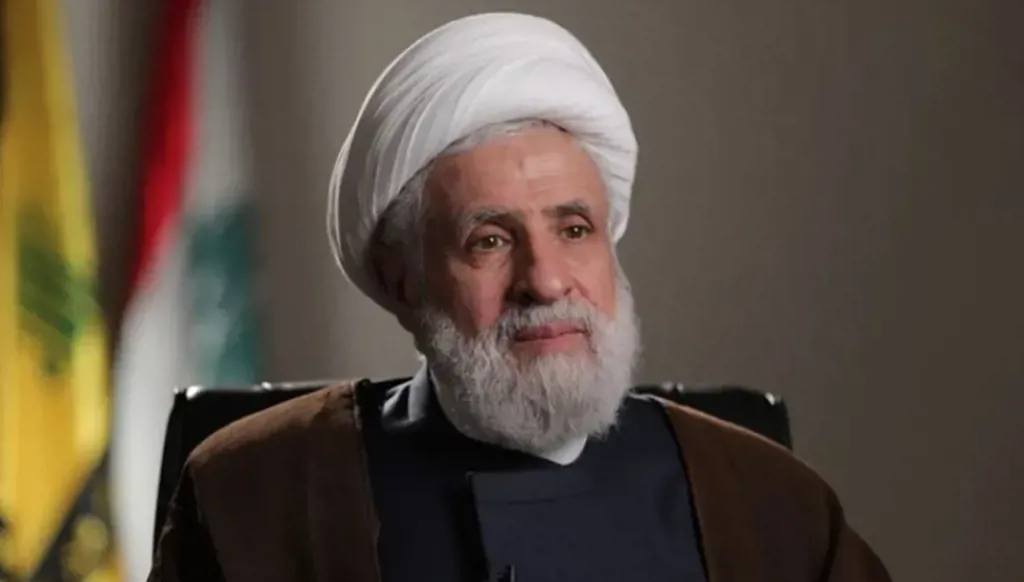

BEIRUT — Hezbollah leader Naim Qassem has rejected any agreement that would link the group’s withdrawal from southern Lebanon to a partial Israeli military pullback, insisting that any ceasefire arrangement must apply to the entire country.
Speaking amid escalating tensions in the Middle East, Qassem said Hezbollah would not accept a deal that treats southern Lebanon separately from the rest of the nation.
“The ceasefire must be comprehensive, with no separation between the South and the rest of Lebanon,” Qassem said, according to regional media reports.
His comments come as fighting between Israel and Hezbollah continues despite growing international pressure for de-escalation and reports of tense discussions between U.S. President Donald Trump and Israeli Prime Minister Benjamin Netanyahu regarding military operations in Lebanon.
Iran Ties Lebanon to Broader Regional Negotiations
Iranian Foreign Minister Abbas Araghchi reportedly warned that any future agreement involving Iran and the United States must also address the situation in Lebanon.
According to regional reports, Araghchi said that if Israeli strikes expand into Beirut, it could trigger a broader return to war.
The statement highlights the increasingly interconnected nature of regional conflicts involving Iran, Israel, Hezbollah, and other armed groups operating throughout the Middle East.
Israel Continues Operations Against Hezbollah
Israeli forces have continued military operations targeting Hezbollah positions in southern Lebanon and areas believed to be used by the group’s command infrastructure.
Israeli officials have repeatedly stated that military pressure is necessary to prevent Hezbollah from rebuilding its capabilities near the Israeli border.
The conflict has displaced thousands of civilians on both sides of the border and raised concerns among international observers that the fighting could expand into a wider regional confrontation.
Regional Security Concerns Grow
The latest developments come as Gulf nations monitor the situation closely.
Kuwaiti officials reported intercepting multiple missiles and drones allegedly launched during recent hostilities, prompting the government to summon Iranian diplomatic representatives and expel two Iranian diplomats.
While details surrounding the incident remain disputed, the episode underscores growing fears that ongoing conflicts involving Israel, Iran, and Hezbollah could spill beyond Lebanon and Israel.
Key Developments
The continued standoff between Israel and Hezbollah threatens efforts to secure a lasting ceasefire and increases the risk of broader instability across the Middle East.
With Iran linking Lebanon to wider negotiations and Hezbollah refusing a limited withdrawal arrangement, diplomatic efforts face significant obstacles as international leaders attempt to prevent further escalation.