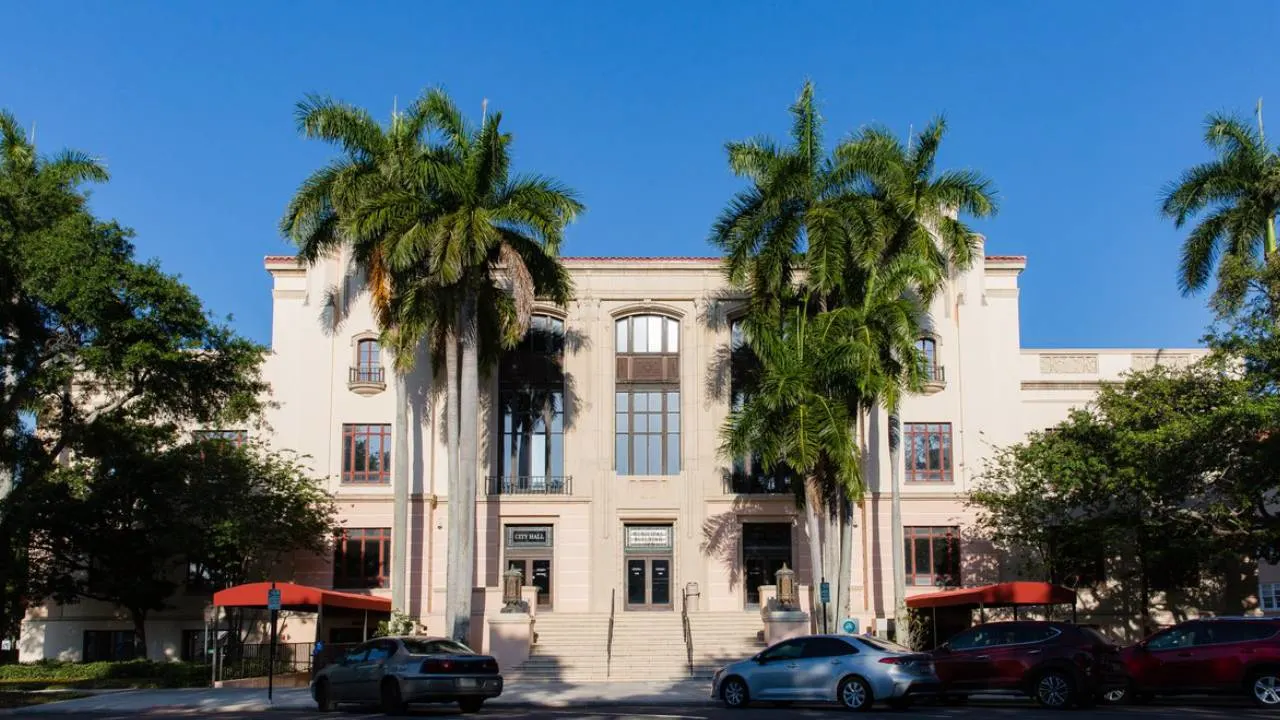
ST. PETERSBURG, Fla. — St. Petersburg voters will decide in November whether the city can borrow up to $600 million to accelerate major flood-control, stormwater and utility infrastructure projects.
The St. Petersburg City Council voted 7-0 Thursday to approve ballot language authorizing a general-obligation bond referendum for the Nov. 3 general election.
If voters approve the measure, the city could issue the bonds in multiple rounds between 2027 and 2030. The debt would be repaid through a new property tax rather than utility fees alone.
The referendum would authorize bonds lasting no more than 30 years from each issuance date. Interest rates could not exceed the maximum permitted under Florida law.
What St. Petersburg voters will see on the ballot
The approved ballot question asks:
“Shall the City finance storm resilience improvements, including but not limited to, floodwater protection, stormwater pump stations, drainage infrastructure, as well as wastewater collection and treatment facilities, drinking water distribution and supply facilities, by issuing general obligation bonds in one or more series, not exceeding $600,000,000, bearing interest not exceeding maximum legal rates, maturing not more than 30 years from each issuance date, pledging the City’s full faith, credit, and unlimited ad valorem taxing power?”
The phrase “unlimited ad valorem taxing power” means the city would use property-tax revenue to meet its debt obligations.
The $600 million represents the maximum principal amount voters would authorize. The total cost to taxpayers would be higher after interest and other borrowing expenses are included. The final amount would depend on interest rates, issuance schedules and market conditions when the bonds are sold.
Proposed property-tax cost
Preliminary estimates presented during the city’s April bond discussions placed the potential property-tax rate at approximately 0.96 mills. The final rate would depend on how much the city borrows, when each bond series is issued and the interest rates available at that time.
At that rate, a property owner would pay approximately $96 annually for every $100,000 of taxable property value. Taxable value is the amount remaining after applicable exemptions and does not necessarily equal a property’s market value.
A property with $300,000 in taxable value, for example, could face an estimated increase of approximately $288 per year.
The precise rate could change depending on the final borrowing schedule, interest rates and other financing conditions.
Unlike revenue bonds, which are repaid through utility charges or another designated revenue source, general-obligation bonds are backed by the city’s taxing authority.
City officials argue that this structure could allow St. Petersburg to borrow at lower interest rates while spreading the cost across taxable properties, including properties that may benefit from flood protection but do not generate significant utility revenue.
Bond would accelerate resilience projects
The proposed bonds would support projects included in the St. Pete Agile Resilience program, known as SPAR.
The initiative is intended to accelerate improvements to infrastructure exposed as vulnerable during Hurricanes Helene and Milton, including stormwater drainage, wastewater treatment, drinking-water distribution and flood protection.
Eligible projects could include:
- Floodwater protection.
- Stormwater pumping stations.
- Drainage-system improvements.
- Wastewater collection and treatment facilities.
- Drinking-water distribution and supply facilities.
- Utility hardening in flood-prone areas.
The city’s broader SPAR program includes approximately $2.7 billion in planned resilience work. Without the bond, much of that construction would be funded gradually through utility revenue and completed over approximately 24 years.
City financial presentations indicated that the $600 million bond could provide roughly $120 million in additional infrastructure spending annually during its initial years, compressing the projected construction schedule by approximately five years.
The bond would supplement—not replace—utility-funded infrastructure spending.
Hurricanes exposed infrastructure vulnerabilities
The proposal follows extensive flooding and utility disruptions caused by Hurricanes Helene and Milton in 2024.
Helene forced the city to shut down the Northeast Water Reclamation Facility after storm surge threatened critical equipment. The shutdown affected wastewater service and contributed to a discharge of approximately 1 million gallons of sewage into surrounding areas.
St. Petersburg subsequently completed a roughly $67 million project to elevate and harden generators, fuel storage and other critical systems at the facility, according to a Spectrum Bay News 9 report on the completed improvements.
City officials have cited that project as an example of the improvements envisioned through SPAR.
The city also faces substantial long-term costs associated with drainage improvements, pump stations, seawalls, treatment facilities and infrastructure in low-lying neighborhoods.
Property tax versus utility fees
City officials have framed the referendum as a choice between issuing property-tax-backed bonds and relying more heavily on future utility-rate increases to accelerate the same construction.
During the city’s April financing discussions, officials estimated that accelerating an equivalent amount of work through utility charges could require the average customer to pay approximately $486 more per year. That figure was presented as a financing comparison, not as an approved utility-rate increase.
That comparison is not exact because property taxes and utility fees are distributed differently.
The bond would impose costs based on taxable property value, while utility increases would fall primarily on customers according to the city’s rate structure and service usage. Renters could also face indirect costs if landlords pass higher property taxes through rent increases.
If the referendum fails, the city could still proceed with SPAR projects, but construction would likely remain more dependent on utility revenue, grants and work scheduled over a longer period.
Additional city questions will appear on ballot
The infrastructure bond will be one of several St. Petersburg questions on the November ballot.
Other proposed measures involve protected properties in the Methodist Town and Jamestown neighborhoods, submerged lands near Harborage Marina, lease restrictions at the Port of St. Petersburg and charter language connected to the city’s move to even-year elections.
City officials previously agreed to place the infrastructure bond first among the municipal questions.
The referendum will appear alongside statewide and local races on Florida’s Nov. 3 general-election ballot. Voters can find additional election dates, candidate information and ballot-measure coverage in The Florida Pundit’s Florida Elections 2026 voter guide.
The bond referendum comes as St. Petersburg also moves forward with another major long-term development initiative. The city recently selected two development teams for the Historic Gas Plant District redevelopment, a multiyear project expected to include housing, new streets, public infrastructure, parks and commercial development surrounding Tropicana Field.
Why it matters
The referendum asks St. Petersburg voters to make a long-term financial decision involving infrastructure, taxation and the city’s vulnerability to flooding and major storms.
Supporters are likely to argue that borrowing now will allow the city to complete essential projects before another destructive hurricane exposes the same weaknesses.
Opponents or skeptical voters may question the overall cost after interest, the proposed property-tax increase and whether the city has provided a sufficiently detailed and prioritized project list.
The proposal also arrives as property taxes play a growing role in Florida’s 2026 elections. A separate statewide measure, Amendment 3, would significantly reduce local property-tax collections. The Florida State Fraternal Order of Police has warned that the statewide amendment could jeopardize public-safety funding, while U.S. Sen. Rick Scott says he will support it while urging local governments to protect essential services.
Approval of the St. Petersburg referendum would not require the city to issue the entire $600 million immediately. It would give city officials authority to borrow up to that amount through one or more bond offerings.
St. Petersburg voters will make the final decision Nov. 3.
Sources
- City of St. Petersburg — General-obligation bond referendum announcement and approved ballot language
- Florida Politics — Approved ballot language and bond terms
- St. Pete Rising — Bond financing and SPAR analysis
- Spectrum Bay News 9 — Northeast Water Reclamation Facility improvements
- WUSF — Mayor Ken Welch’s infrastructure proposal
Related Coverage
- St. Petersburg Selects Development Teams for Historic Gas Plant District Redevelopment
- Florida FOP Opposes Amendment 3 Over Public-Safety Funding
- Rick Scott Backs Amendment 3 and Warns Against Service Cuts
- Florida Elections 2026: Candidates, Races and Ballot Measures