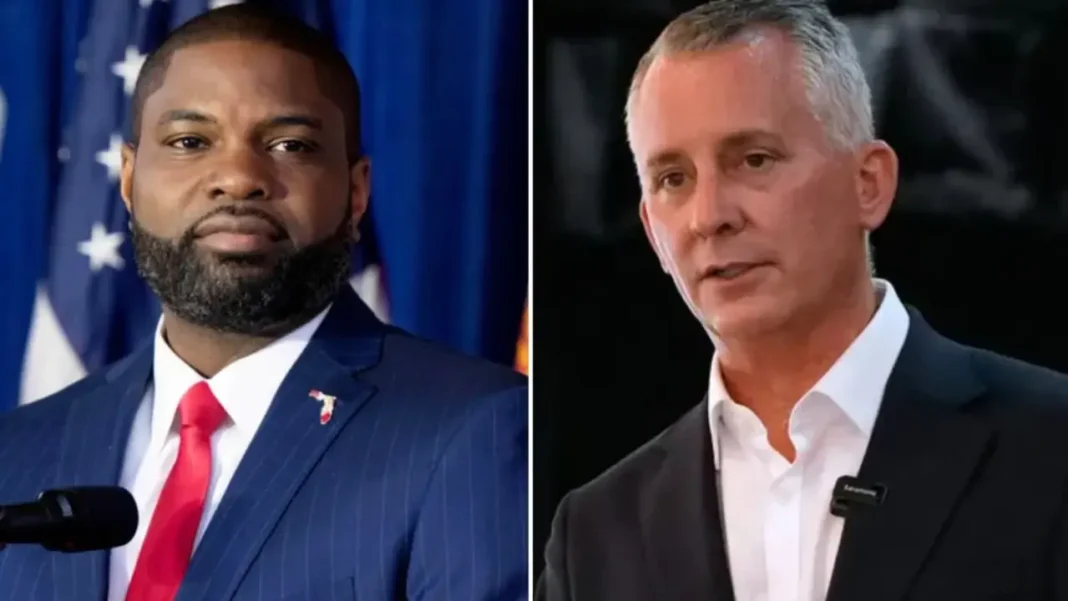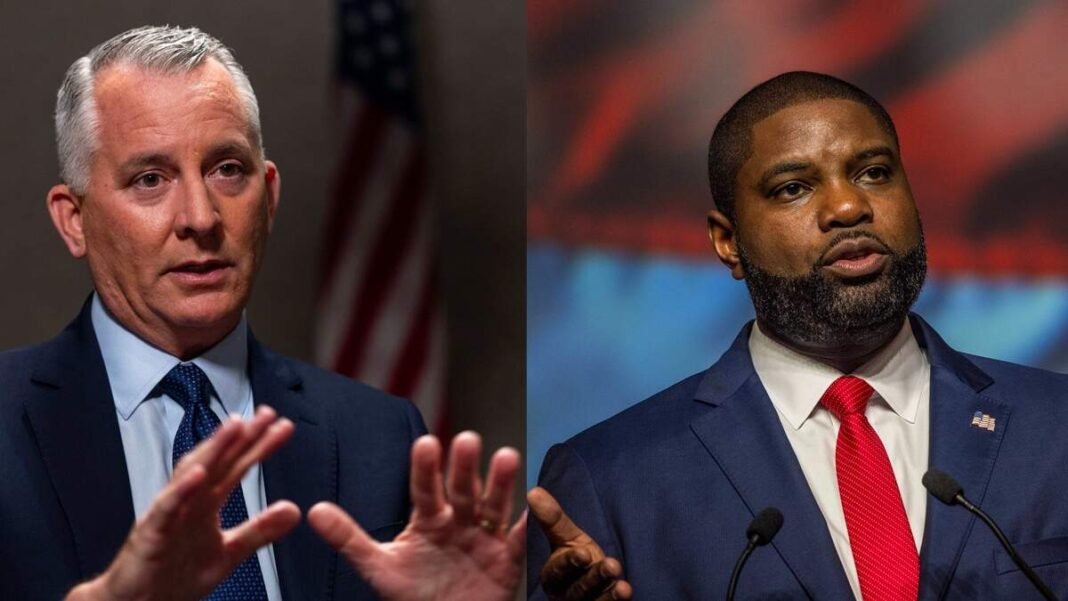

The latest polling offers another measure of the Florida governor’s race, separate from the campaigns’ financial resources. As The Florida Pundit previously reported in its analysis of the candidates’ fundraising, Byron Donalds held a substantial cash advantage over David Jolly heading into the fall campaign. That financial disparity provides important context, but campaign funds and voter preferences measure different things—and neither alone determines the election outcome.
Read more: Byron Donalds Builds Massive Cash Advantage Over David Jolly in Florida Governor Race
Donalds’ Legislative Record Adds Another Dimension to the Race
Polling and fundraising provide two measures of Florida’s governor’s race, but the candidates’ policy records offer another way to assess the contest.
As previously reported by The Florida Pundit, Byron Donalds’ record in the Florida Legislature has drawn scrutiny over a 2017 proposal affecting public-meetings requirements and a 2019 bill seeking to raise the threshold for certain felony theft offenses from $300 to $1,000. The 2019 proposal itself did not become law, although related provisions were addressed in separate legislation.
Donalds’ campaign has highlighted his record on school choice and parental rights. The debate over his earlier proposals raises questions about how his past legislative positions compare with the priorities he would pursue as governor.
Read more: Byron Donalds’ Tallahassee Record Faces New Scrutiny in Florida Governor’s Race.
Independent voters emerge as a key dividing line
One of the survey’s notable findings concerns voters who do not identify with either major party.
According to the poll results reported by FOX 35 Orlando, Jolly leads Donalds by 16 percentage points among independent voters.
The poll also found that 11% of registered Republicans surveyed indicated support for Jolly, compared with 5% of Democrats who said they supported Donalds.
These findings suggest that candidate support extends beyond traditional party lines in at least some parts of the electorate. However, subgroup results generally carry greater uncertainty than statewide figures, and the survey’s sample size for independent voters should be considered when interpreting the gap.
Economy, insurance and data centers shape voter comparisons
The survey examined how voters viewed the candidates on several issues affecting Florida residents.
On affordability and the cost of living, 43% said they trusted Jolly more to address the issue, compared with 42% who favored Donalds.
On property insurance, Donalds led Jolly 43% to 38%.
On data centers, 41% said they trusted Jolly more, while 37% favored Donalds.
The results show different levels of confidence depending on the issue. They do not, by themselves, demonstrate that any single issue will determine voters’ final choices.
For Florida households, property insurance costs, housing affordability and the potential effects of large data-center developments remain important topics for candidates to address during the campaign.
What the poll does—and does not—tell us
The survey provides a snapshot of likely voters’ preferences during a specific period in October. It is not a forecast of the final vote.
The reported margin of sampling error is plus or minus 2.81 percentage points. That figure describes sampling uncertainty under the poll’s assumptions and does not account for every possible source of error, including nonresponse, weighting and changes in turnout.
The poll’s telephone methodology and use of a voter-file sample are also relevant when evaluating how well the findings represent the electorate.
Readers should compare this survey with other recent polls, paying attention to each pollster’s field dates, sample population and methodology before drawing conclusions about the broader state of the race.
The bottom line
The University of North Florida survey places Donalds at 49% and Jolly at 47%, a two-point difference within the poll’s margin of sampling error. The results also identify differences in how voters view the candidates on affordability, property insurance and data centers.
The next important developments will include additional polling, campaign disclosures, candidate appearances and evidence of voter participation as the November 3, 2026, general election approaches.
Related coverage
Governor’s race polling and the two-point gap
Donalds–Jolly fundraising comparison
Donalds’ Florida legislative record
Stay informed: Follow The Florida Pundit for continuing coverage of Florida campaigns, elections and public policy.