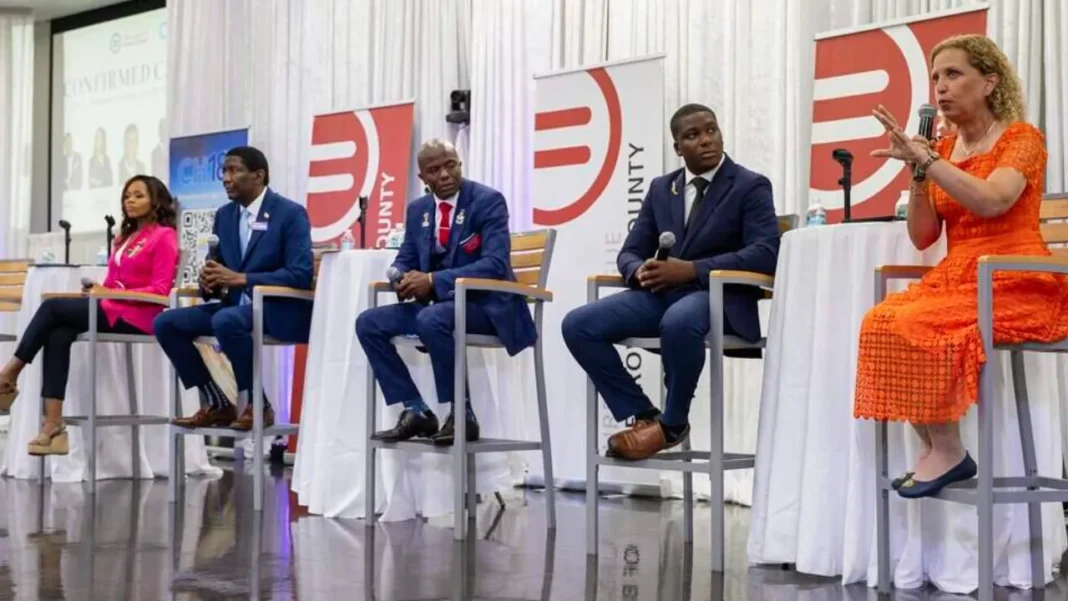

FORT LAUDERDALE, Fla. — U.S. Rep. Debbie Wasserman Schultz faced sharp criticism from Democratic opponents during a contentious congressional debate this week, defending her decision to run in Florida’s 20th Congressional District despite objections that the seat was drawn to preserve Black representation in Congress.
The debate, hosted at the Urban League of Broward County, brought together Wasserman Schultz and several Democratic challengers, including former U.S. Rep. Sheila Cherfilus-McCormick, former Broward County Mayor Dale Holness, Rod Joseph, and Elijah Manley.
The central issue was not policy differences but whether Wasserman Schultz should be seeking election in a district that has historically served as a majority-Black congressional seat.
“This is a Black-access district and if we erase the remedy, we’re erasing the past,” Cherfilus-McCormick argued during the debate, echoing concerns raised by community leaders and activists since Wasserman Schultz announced her candidacy.
For decades, Florida’s 20th Congressional District has been structured to ensure Black voters have an opportunity to elect candidates of their choice. Critics contend that electing a non-Black candidate could undermine the purpose of the district, even if voters ultimately make that decision at the ballot box.
Wasserman Schultz pushed back on those arguments, emphasizing her long record representing South Florida and arguing that voters should decide who is best qualified to represent the district in Washington.
The debate highlighted growing tensions within South Florida’s Democratic Party as candidates compete for one of the state’s safest Democratic seats.
Beyond questions of representation, candidates also sparred over affordability, healthcare, economic opportunity, and federal funding priorities. However, the district’s identity and political future remained the dominant theme throughout the event.
The race has quickly become one of Florida’s most closely watched congressional contests of 2026, drawing attention from party leaders, community organizations, and political observers across the state.
With multiple well-known Democratic candidates competing for the nomination, the primary is expected to test whether voters prioritize experience, representation, or a new generation of leadership.
The outcome could also shape future debates about redistricting and minority representation in Florida politics.
As the campaign enters its final stretch, the question remains whether Wasserman Schultz can convince voters that her experience outweighs concerns about the district’s historic purpose.