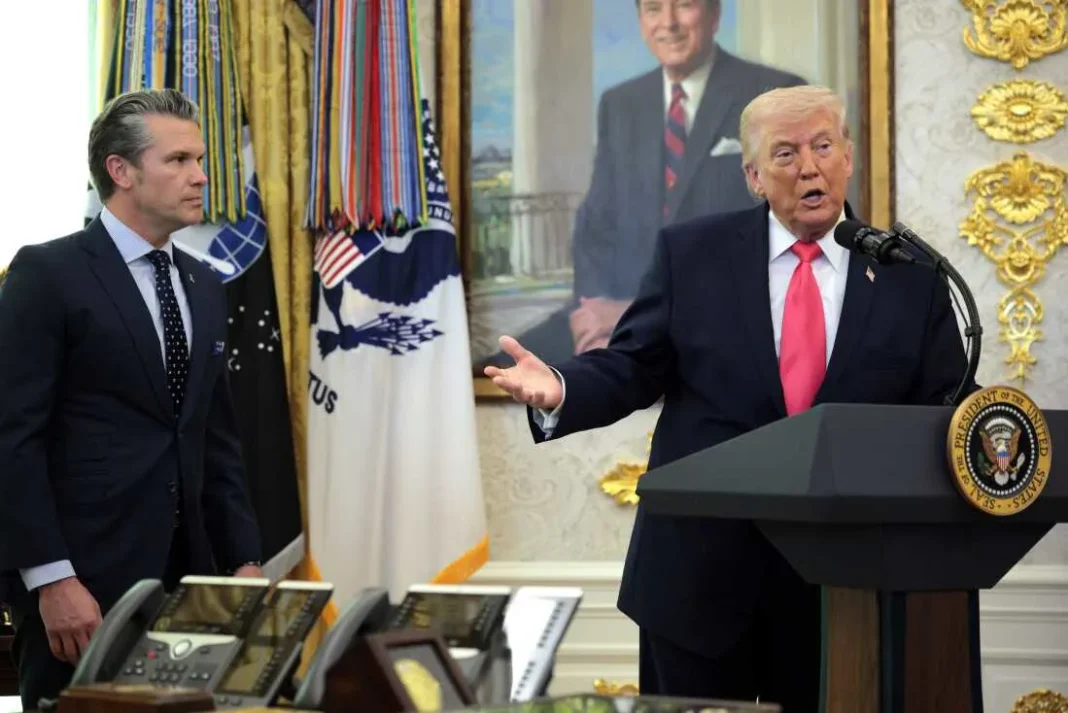

WASHINGTON — President Donald Trump said he is in no rush to finalize a diplomatic agreement with Iran, signaling that the administration is willing to extend negotiations if necessary to secure what he described as a stronger and more durable deal.
During an interview broadcast Saturday on Fox News, Trump said the United States is making progress in discussions with Tehran but emphasized that speed is not his primary concern.
“If you’re going to be in a hurry, you’re not going to make a good deal,” Trump said, while stressing that the central objective remains preventing Iran from obtaining a nuclear weapon.
The president’s remarks come as negotiations continue over a proposed framework that would address Iran’s nuclear activities, regional security concerns, and access to critical maritime trade routes.
Nuclear Weapons Remain a Red Line
Trump reiterated that any final agreement must guarantee that Iran never acquires a nuclear weapon.
Administration officials have repeatedly stated that preventing nuclear proliferation remains the foundation of U.S. policy toward Iran. The president said that assurance is non-negotiable and suggested that ongoing talks have focused heavily on verification measures and long-term compliance.
The comments followed recent discussions among senior national security officials regarding the status of negotiations and potential revisions to a proposed agreement.
Strait of Hormuz Still a Major Issue
In addition to nuclear concerns, the administration continues to push for unrestricted commercial access through the Strait of Hormuz, one of the world’s most important energy shipping corridors.
The strategic waterway carries a significant share of global oil exports, making its security a major concern for international markets and U.S. allies in the region.
Trump has argued that any agreement should guarantee freedom of navigation and reduce the risk of future disruptions to global energy supplies.
Pentagon Signals Military Option Remains Available
Defense Secretary Pete Hegseth has echoed the administration’s position, stating that the United States remains committed to securing a comprehensive agreement while maintaining military readiness if diplomacy fails.
The administration has consistently maintained that negotiations are preferred, but officials have also warned that alternative measures remain available should talks break down.
Negotiations Continue
Despite optimistic statements from both sides in recent weeks, significant issues remain unresolved.
Reports indicate negotiators are still working through disputes involving Iran’s nuclear materials, inspection requirements, sanctions relief, and broader regional security concerns.
Trump suggested a deal remains possible but made clear that the United States will not compromise on its core objectives.
As negotiations continue, markets and foreign policy analysts are closely watching developments that could reshape security dynamics across the Middle East and influence global energy prices.
For now, the White House appears focused on securing what it views as a stronger agreement rather than rushing toward a quick diplomatic victory.